
Red Teaming services
Simulate a cyber-attack against your organisation
- Challenge defences with a real-world attack simulation
- Understand the true impact a security breach would have on your organisation
- Validate the investments made in your blue team and their technologies
- Delivered by CREST accredited testers
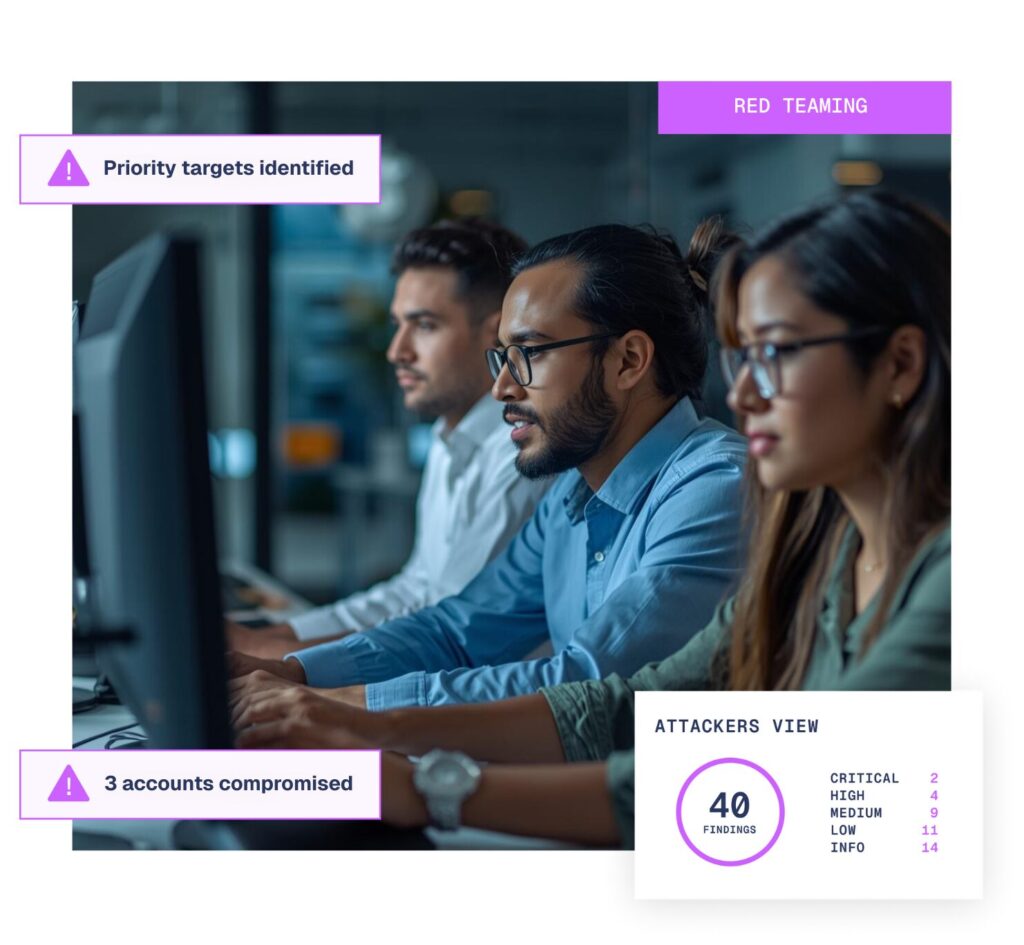
Advanced Red Teaming Services
Red Teaming is our controlled and highly realistic offensive security engagement that gets as close as possible to understanding how well prepared your organisation really is when it comes to defending against a skilled and persistent adversary.
Our certified specialists simulate ‘end-to end’ attacks over extended periods of time. They will evaluate your entire security ecosystem; your people, processes and technologies, and how well your detection, response, communication, and incident response capabilities stand up to prolonged, creative attacks that mirror real threat actors.
Book your Red Teaming scoping call
Ready to get a faster, clearer, and simpler view of your real world cybersecurity capabilities?
Whether you need help or a quote for a live project or just some quick advice, our team of cybersecurity experts here for you. Simply complete the form, or give us a call on 0330 460 4633 to start a conversation.
Trusted to provide a faster, clearer, and simpler view of cybersecurity by







What is involved in a Red Teaming excercise?
A Red Teaming engagement will:
- Be goal-oriented and focus on a realistic objective for an attacker, such as achieving data exfiltration, privilege escalation, or business disruption.
- Be threat intelligence-led by researching and deploying the tactics, techniques, and procedures used by real-life criminals currently being observed in the wild, our Red Team are able to replicate threats relevant to your industry.
- Test your organisations security across all disciplines as our team set out to achieve their objective. They will get creative and stress-test all your technical controls, detection tools, SOC workflows, IR plans, employee phishing susceptibilities, and escalation practices.
- Be ‘End-to-end’ by including the different ‘phases’ a real attacker will move through including reconnaissance, initial access, lateral movement and exfiltration.
Scoping & rules of engagement
Sets the boundaries, expectations, and safety controls before any simulated attack starts, ensuring alignment with the organisations’ security goals
For example, a Red Teaming engagement could be used to:
-
Test detection and response capabilities.
-
Assess real-world attacker resilience of critical assets.
-
Evaluate employee susceptibility to social engineering.
-
Validate effectiveness of incident response processes.

Reconnaissance and attack planning
Acting just like an attacker, our team look for intelligence to help plan their attack paths by:
- Building a comprehensive picture of your assets and exposures through OSINT, human, and passive discovery.
- Identifying high-value targets.
- Gather indicators that will support later phase lateral movement and exfiltration.
- Planning how to minimise noise to evade your MDR / EDR tooling.
- Prepare tooling and infrastructure for their ‘attack’ e.g. C2 servers, phishing kits, and payloads.

Achieving initial access
Our team will attempt to breach your defences using information gathered during reconnaissance. Just like a real attacker they will look to:
- Utilise phishing or social engineering tactics or take advantage of other vulnerabilities or gaps in supply chains, cloud environments, or patching programs to gain an initial foothold in your network.
- Identify ways to escalate privileges and move laterally around your network.
- They will look to install backdoors, scheduled tasks, or implants or set up encrypted channels to maintain long-term access.
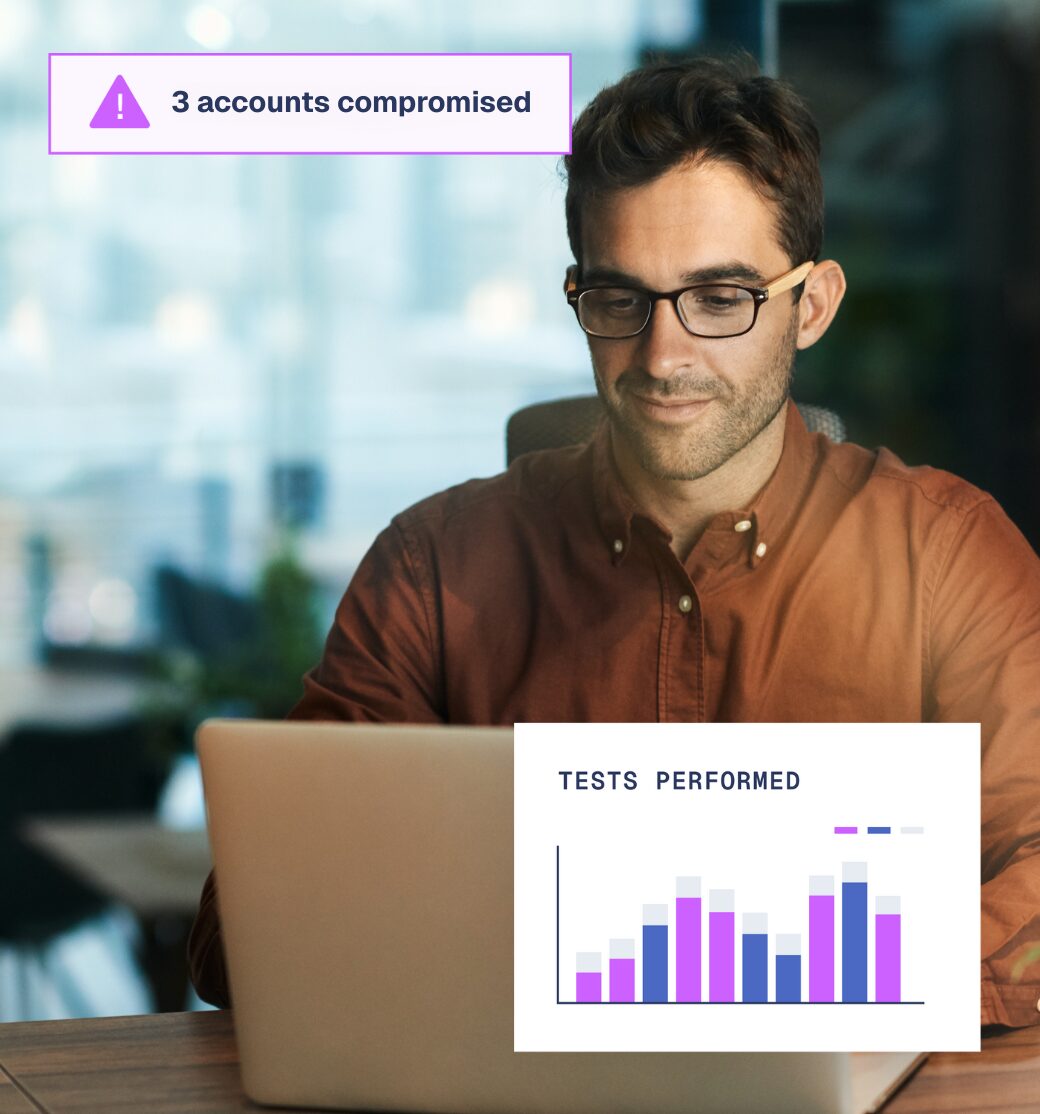
Privilege escalation and lateral movement
Having gained their foothold, our team will attempt to navigate your network to achieve their ‘objectives’ while avoiding detection.
You can choose to make your defenders aware of the engagement or not, but their goal will be to detect and stop lateral movement before our team achieves their objective.
This phase is where your network segmentation, identity controls, and security tooling such as MDR will be tested.

Reporting, debriefing and remediation
Your CISO level consultant and lead tester will provide a full review of their findings and provide a blueprint for remediating the issues raised.
-
We document the full attack chain, evidence, and impact.
-
Provide actionable recommendations for areas including:
-
Detection improvements
-
Hardening controls
-
Incident response readiness
-
-
Conduct a collaborative “purple team” workshop to walk defenders through the key findings.
- The Red Team will re-test to validate that defenses are now effective.

Why Red Teaming is important
Test people, process, and technology
Real attackers exploit human error, misconfigured systems, technology, workflows, communication and trust relationships at the same time. Red teaming is no different and is the most realistic way to simulate that real scenario to put your entire defence under pressure to understand:
- How employees react to phishing and social engineering attempts.
- Whether your SOC and IR processes detect and respond in the real world as they do on paper.
- If your technical controls and network segmentation would really block or slow an attack.
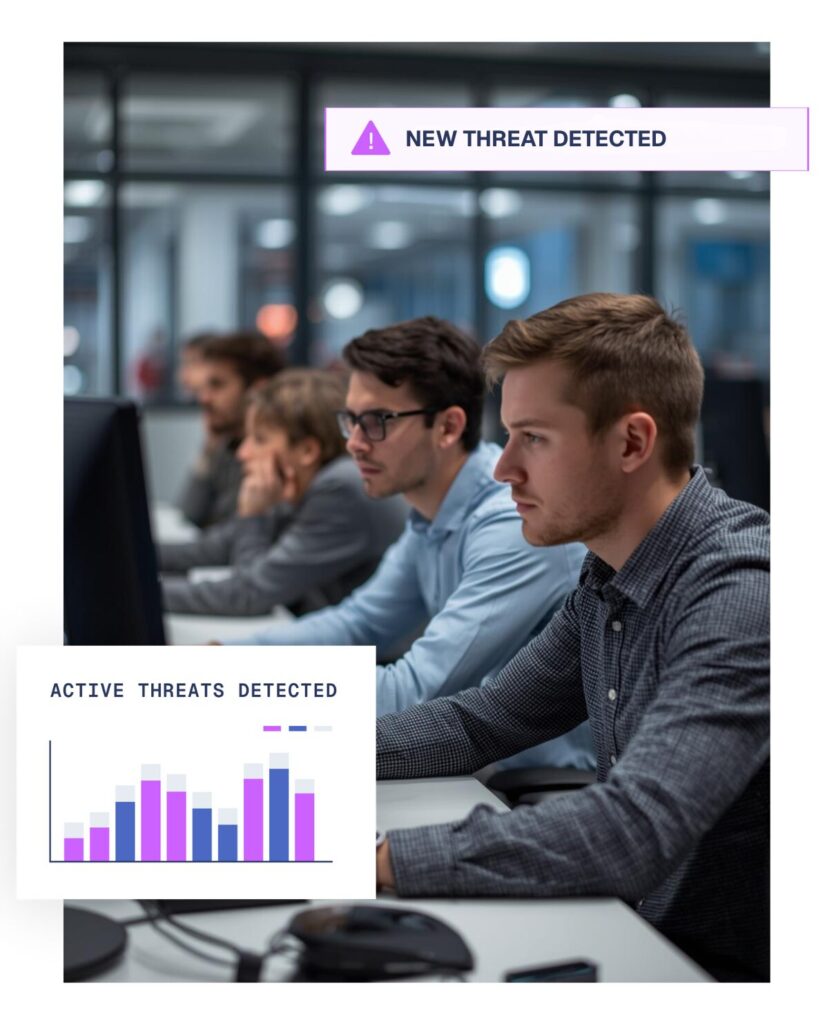
Surface high priority, real world issues
Standard vulnerability scanning and scoped pen tests find technical issues. Red teaming turns these theoretical weaknesses into simulated business impact which makes risk easier to prioritise and communicate with leadership teams.
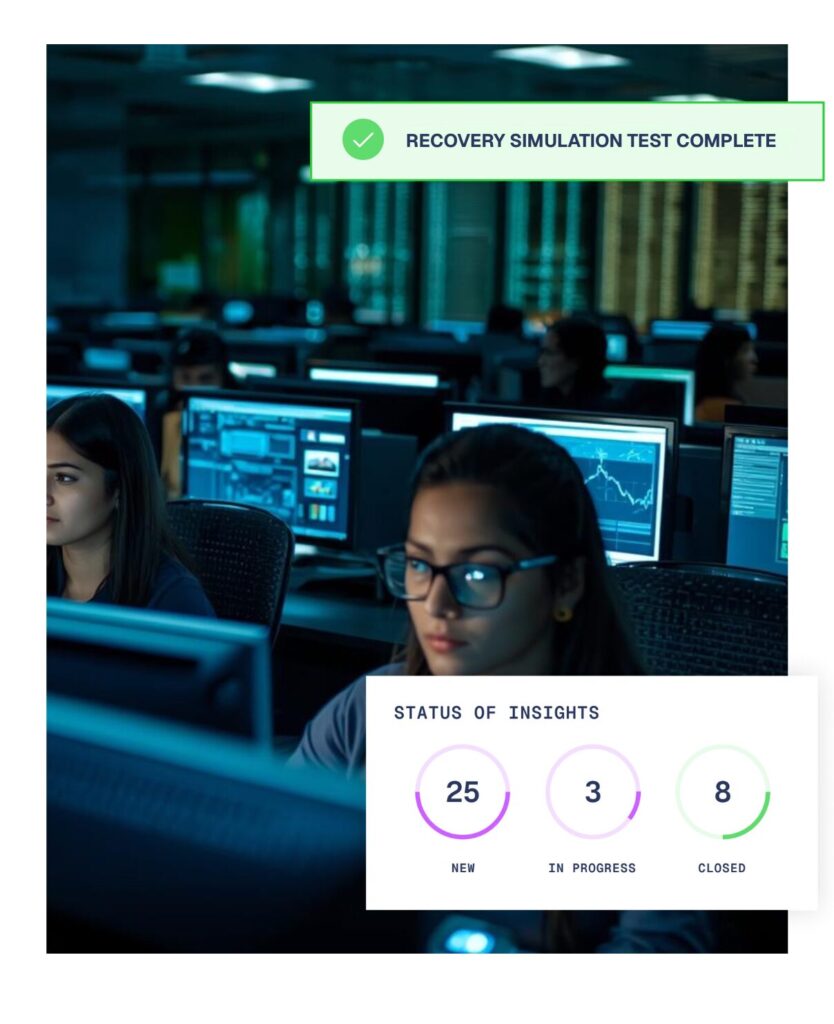
And validates business continuity and recovery plans
Simulated exfiltration or ransomware scenarios test IT infrastructure design, backups and restore procedures, communication plans, and legal / PR readiness revealing gaps tabletop exercises alone often miss.
Strengthen organisational resilience and maturity
Just like elite sports teams in training, repeated, iterative Red Teaming followed by reviews and remediation raises standards and performance in SOC maturity, hardens configurations, and embeds a security-by-design mindset.
It also keeps your teams in tune with their likely future adversaries and their modern attack techniques, living-off-the-land tooling, and supply-chain pivots they are likely to encounter.
Red Teaming FAQs
Red teaming is a simulated, adversary-focused security assessment where a skilled team uses real-world attack techniques to test an organisation’s people, processes, and technology. The goal is to reveal gaps in detection, response, and resilience rather than just find exploitable vulnerabilities.
Penetration testing typically focuses on finding and exploiting specific technical vulnerabilities. Red teaming is broader: it simulates realistic adversaries, includes physical, social engineering, and multi-stage attacks, and evaluates organisational response across detection, containment, and recovery.
It is a good idea to run red team exercises when you need to validate detection and response capabilities after major architecture or process changes, before compliance audits, or annually for high-risk systems. Red Teaming is especially valuable for critical assets and mature security programs.
Through careful scoping and detailing of your rules of engagement, safety checks, using non-destructive techniques and pre-agreed escalation paths, a Red Teaming exercise should not impact day-to-day operations. We can also use test environments or limit exploit intensity to minimise impact.
Simply contact our team to discuss your infrastructure, goals, and preferred testing schedule. We tailor our service to your environment and provide a clear roadmap for improving your external security.